🎉 Up to 70% Off Selected ItemsShop Sale
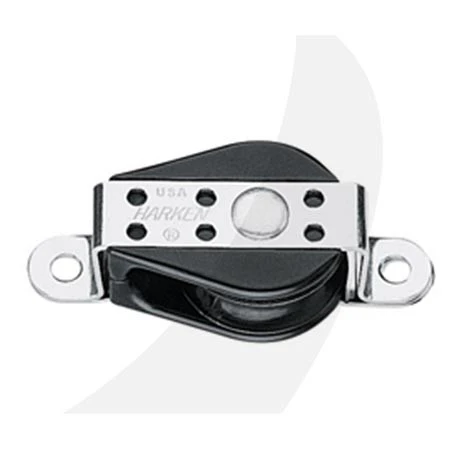
Harken 29 mm Cheek Bullet Block
Manufacturer part #: 109
Technical Description
Wire Cheek
1 1/8 in
29 mm
2 7/8 in
73 mm
1.25 oz
35 g
5/16 in
8 mm
500 lb
227 kg
2000 lb
907 kg
Low-friction Bullet blocks lead control lines aft. They are compact and lightweight, with fast trim and release under high or low loads. A range of styles lets these blocks adapt to almost all control line applications.
Delrin® ball bearings, sheave, and sideplates are UV stabilized with carbon black for maximum protection. Wire Bullet blocks use roller bearings to carry higher loads and feature Hardkote-anodized Teflon® impregnated aluminum sheaves for strength and corrosion resistance. Mast exit blocks with cams used for halyard controls and under boom mainsheets.
Pivoting exit blocks with cams are often used for halyard controls and as "head knockers" for sheeting directly from the boom.
Delrin® ball bearings, sheave, and sideplates are UV stabilized with carbon black for maximum protection. Wire Bullet blocks use roller bearings to carry higher loads and feature Hardkote-anodized Teflon® impregnated aluminum sheaves for strength and corrosion resistance. Mast exit blocks with cams used for halyard controls and under boom mainsheets.
Pivoting exit blocks with cams are often used for halyard controls and as "head knockers" for sheeting directly from the boom.
Manufacturer part #: 109
Technical Description
Wire Cheek
1 1/8 in
29 mm
2 7/8 in
73 mm
1.25 oz
35 g
5/16 in
8 mm
500 lb
227 kg
2000 lb
907 kg
Low-friction Bullet blocks lead control lines aft. They are compact and lightweight, with fast trim and release under high or low loads. A range of styles lets these blocks adapt to almost all control line applications.
Delrin® ball bearings, sheave, and sideplates are UV stabilized with carbon black for maximum protection. Wire Bullet blocks use roller bearings to carry higher loads and feature Hardkote-anodized Teflon® impregnated aluminum sheaves for strength and corrosion resistance. Mast exit blocks with cams used for halyard controls and under boom mainsheets.
Pivoting exit blocks with cams are often used for halyard controls and as "head knockers" for sheeting directly from the boom.
Delrin® ball bearings, sheave, and sideplates are UV stabilized with carbon black for maximum protection. Wire Bullet blocks use roller bearings to carry higher loads and feature Hardkote-anodized Teflon® impregnated aluminum sheaves for strength and corrosion resistance. Mast exit blocks with cams used for halyard controls and under boom mainsheets.
Pivoting exit blocks with cams are often used for halyard controls and as "head knockers" for sheeting directly from the boom.
$24.75
Harken 29 mm Cheek Bullet Block—
$24.75
Description
Manufacturer part #: 109
Technical Description
Wire Cheek
1 1/8 in
29 mm
2 7/8 in
73 mm
1.25 oz
35 g
5/16 in
8 mm
500 lb
227 kg
2000 lb
907 kg
Low-friction Bullet blocks lead control lines aft. They are compact and lightweight, with fast trim and release under high or low loads. A range of styles lets these blocks adapt to almost all control line applications.
Delrin® ball bearings, sheave, and sideplates are UV stabilized with carbon black for maximum protection. Wire Bullet blocks use roller bearings to carry higher loads and feature Hardkote-anodized Teflon® impregnated aluminum sheaves for strength and corrosion resistance. Mast exit blocks with cams used for halyard controls and under boom mainsheets.
Pivoting exit blocks with cams are often used for halyard controls and as "head knockers" for sheeting directly from the boom.
Delrin® ball bearings, sheave, and sideplates are UV stabilized with carbon black for maximum protection. Wire Bullet blocks use roller bearings to carry higher loads and feature Hardkote-anodized Teflon® impregnated aluminum sheaves for strength and corrosion resistance. Mast exit blocks with cams used for halyard controls and under boom mainsheets.
Pivoting exit blocks with cams are often used for halyard controls and as "head knockers" for sheeting directly from the boom.


